Flight Data Monitoring News & Insights
Product news, practical guides and company updates from the AeroSight team.
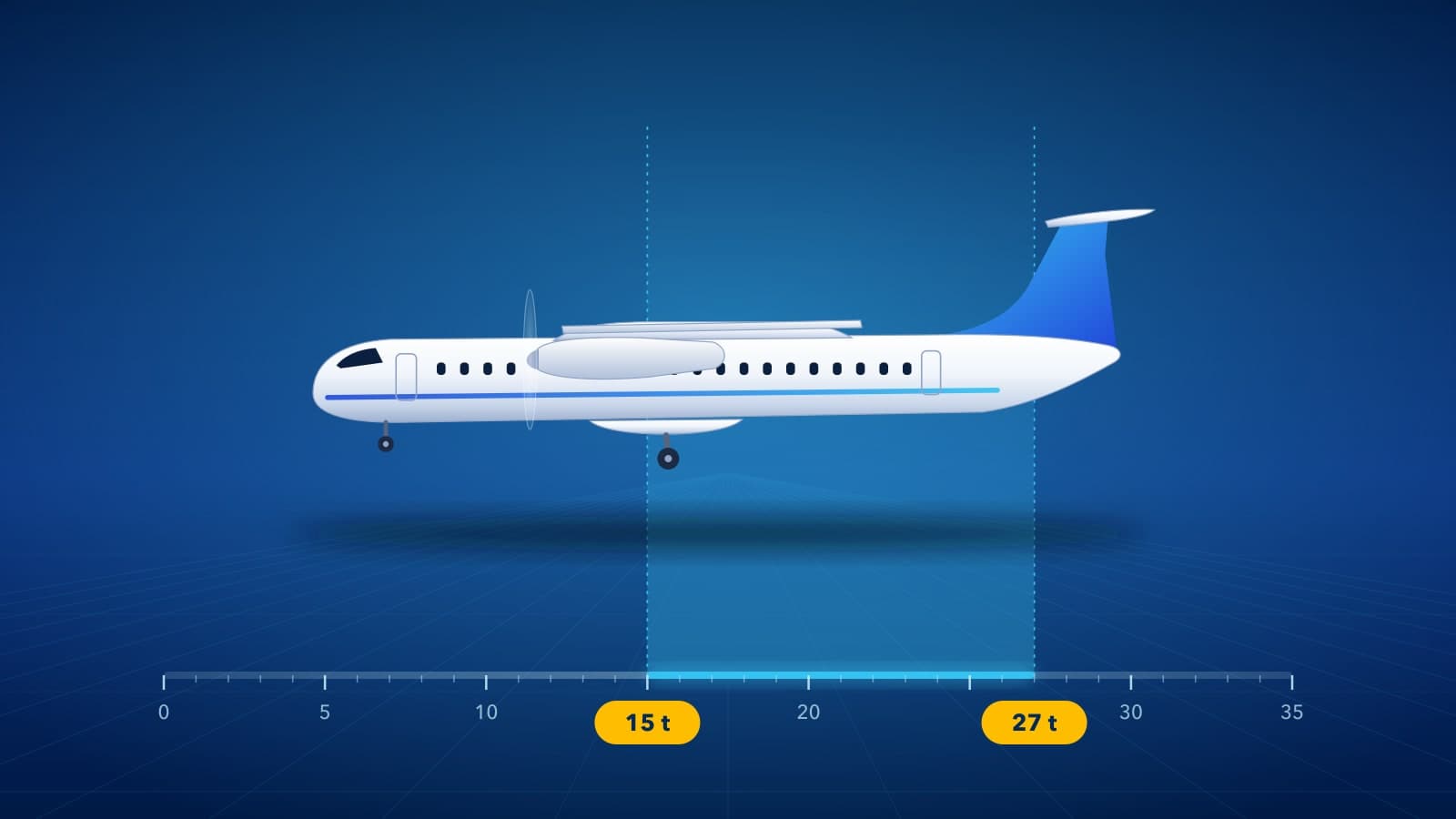
Brazil's RBAC 121: New FDM requirements into force from 1 January 2027
From 1 January 2027, Brazil's RBAC 121 requires a flight data monitoring programme (PAADV) for aeroplanes with a maximum approved take-off weight over 15,000 kg and more than 19 passenger seats, including aeroplanes already in service. What the rule says, who it affects, and how to prepare.
New FDM rules from 1 January 2027: which aircraft, which countries
From 1 January 2027, the ICAO Annex 6 requirements for a flight data monitoring programme become applicable for new aeroplanes of a certificated take-off mass in excess of 15,000 kg with more than 19 passenger seats. Which aeroplanes that catches, which countries have written it into law, where Brazil and Canada go further, and what to do before your next delivery.

AeroSight at the World Aviation Festival 2026: three days in Lisbon
A week after releasing AeroSight FDM v2, we took it to the World Aviation Festival in Lisbon. What we showed at booth 2-139, what operators asked about, and what happens next.
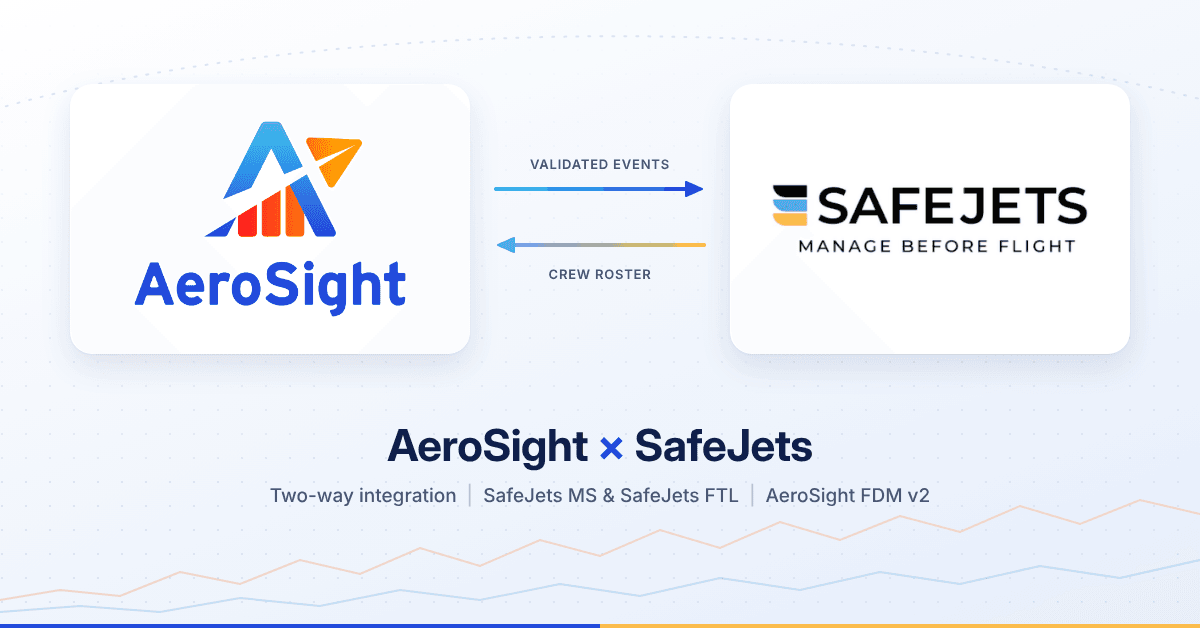
AeroSight FDM v2 integrates with SafeJets in both directions
Accepted flight data events now flow straight into SafeJets MS, and crew assignment flows back from SafeJets FTL into pilot performance monitoring, so a finding reaches the people who act on it without anyone retyping it.
Your FDM programme's health, on the dashboard
AeroSight v2 deep-dive: the EOFDM programme-health KPIs an auditor looks for, reports you build yourself, an Event Definition Sheet with its full sign-off history, and an audit trail of who did what and who could.
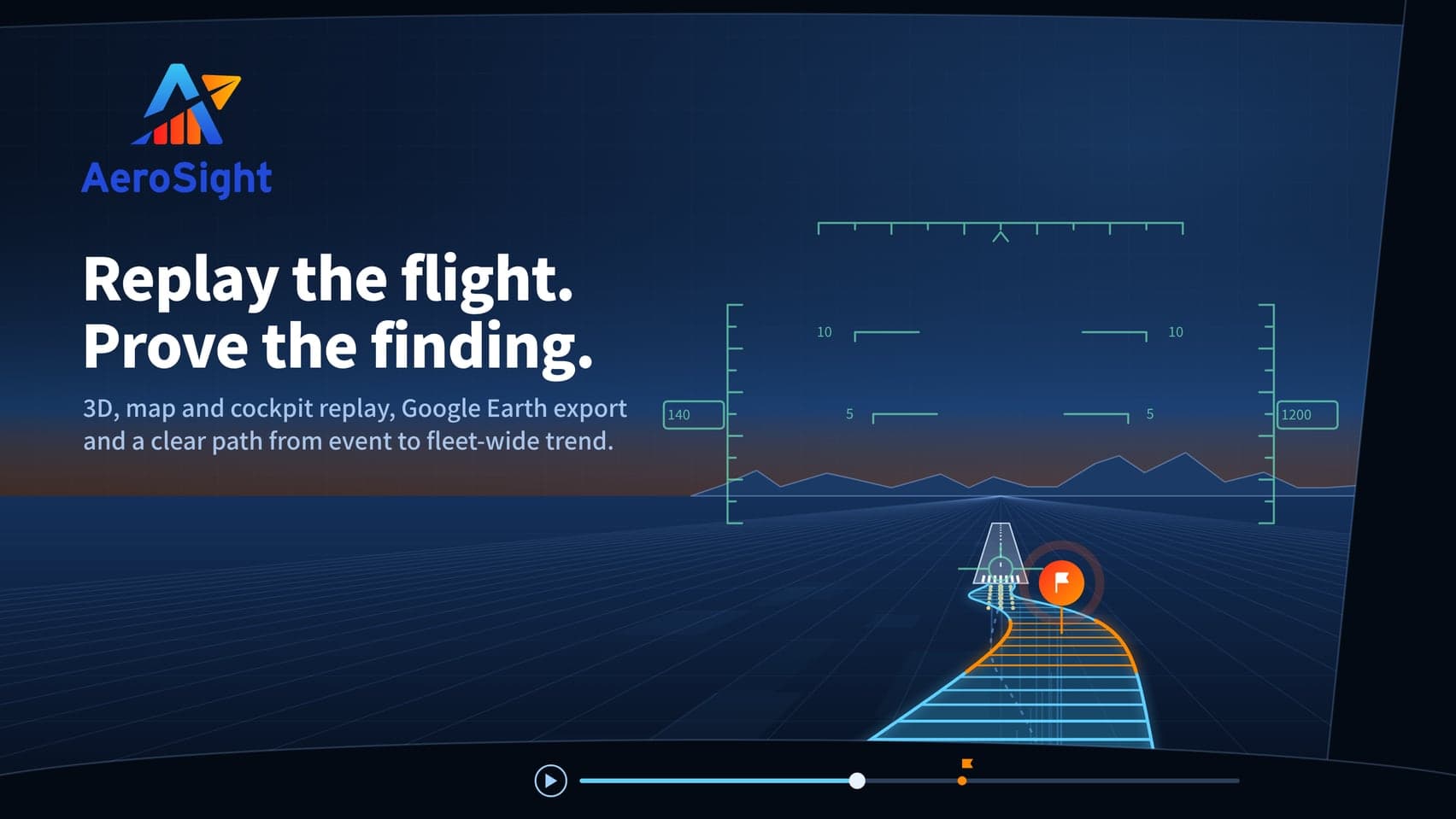
See the flight, not the spreadsheet
The second AeroSight v2 deep-dive: each flight with the weather it was flown in and the published procedure beside its track, three replay views, and one event followed from detection to a fleet-wide trend.
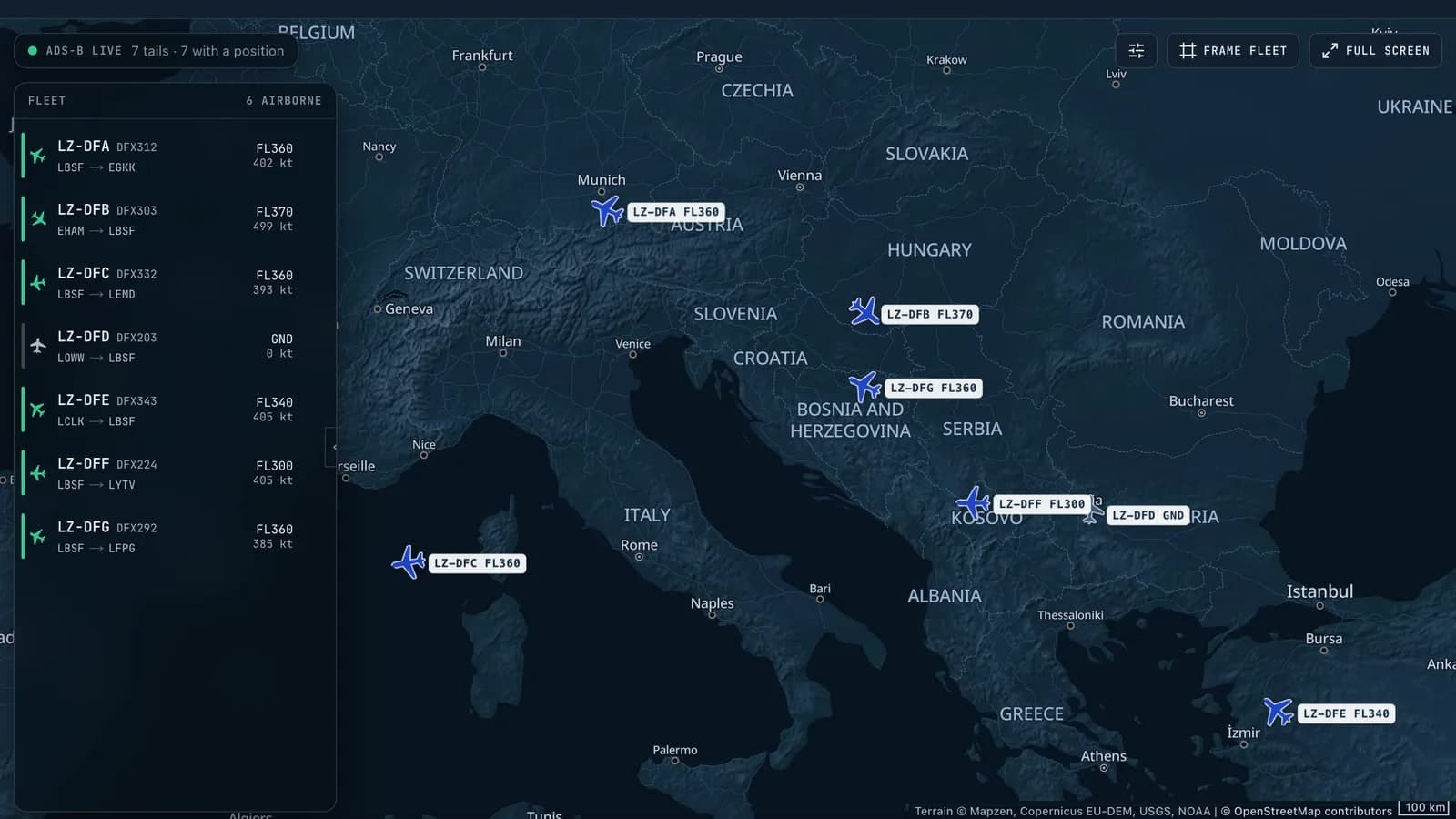
Every flight your fleet flies
ADS-B flight history beside your recorder data, the flights still missing their download flagged, and Live Fleet Monitoring, with the weather, navigational procedures and crew roster in the same platform.
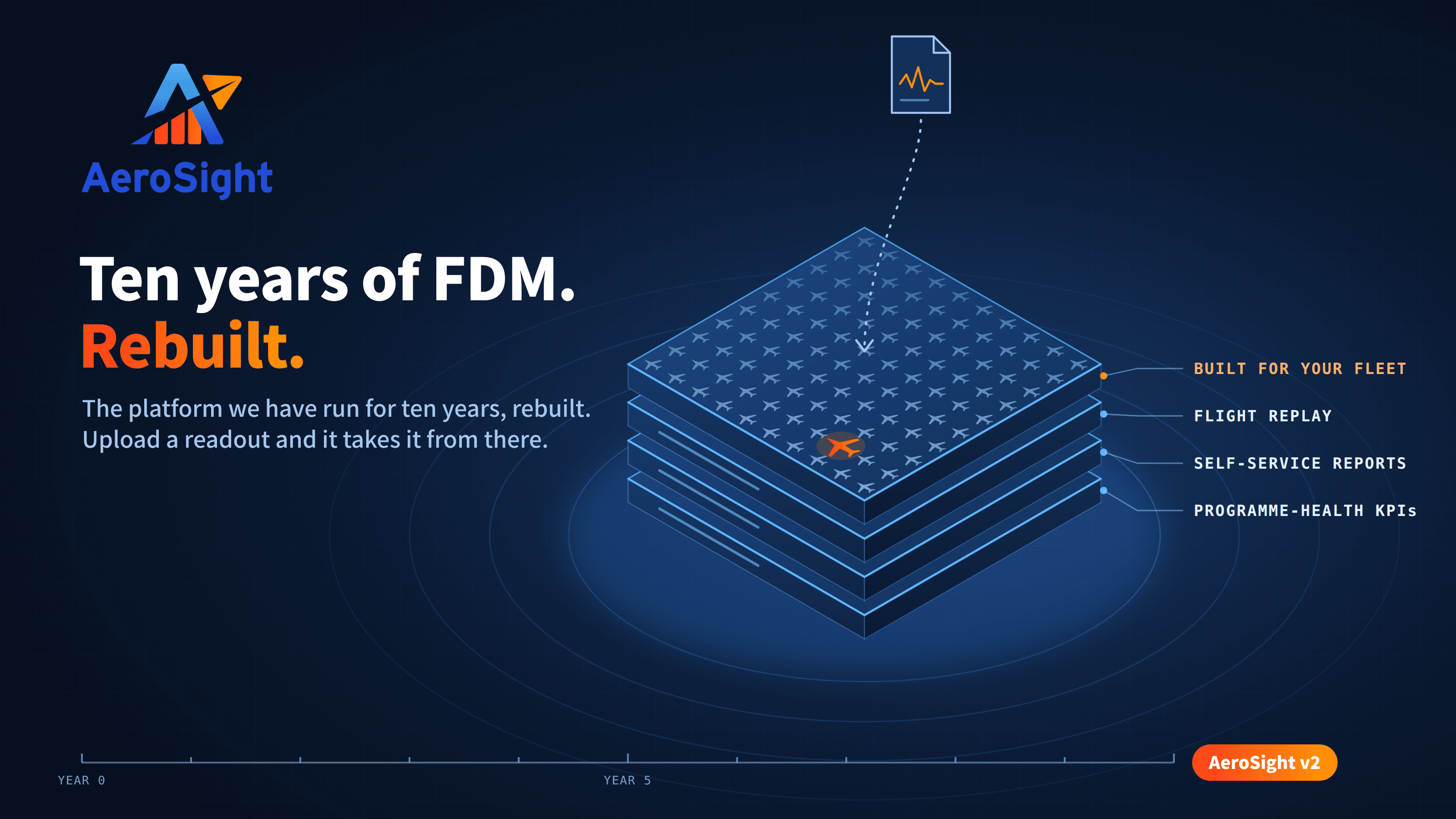
Introducing AeroSight FDM v2 - what ten years taught us
AeroSight FDM v2 is a rebuild of the platform we have run for ten years: every flight your fleet flies, event detection you tune yourself, programme-health KPIs, self-service reports, fuel efficiency and Live Fleet Monitoring, for one aircraft or a hundred.
Common FDM events explained
A flight data monitoring programme produces a list of events, and to anyone outside the safety office the word sounds more alarming than it is. This article explains what an event actually is, how one gets triggered, and what the common events mean, grouped by flight phase: takeoff and climb, the cruise and configuration changes, approach and landing, the warnings the aircraft raises itself, and engine limits. It gives no threshold values, because the ones that matter are the ones your own operation sets.
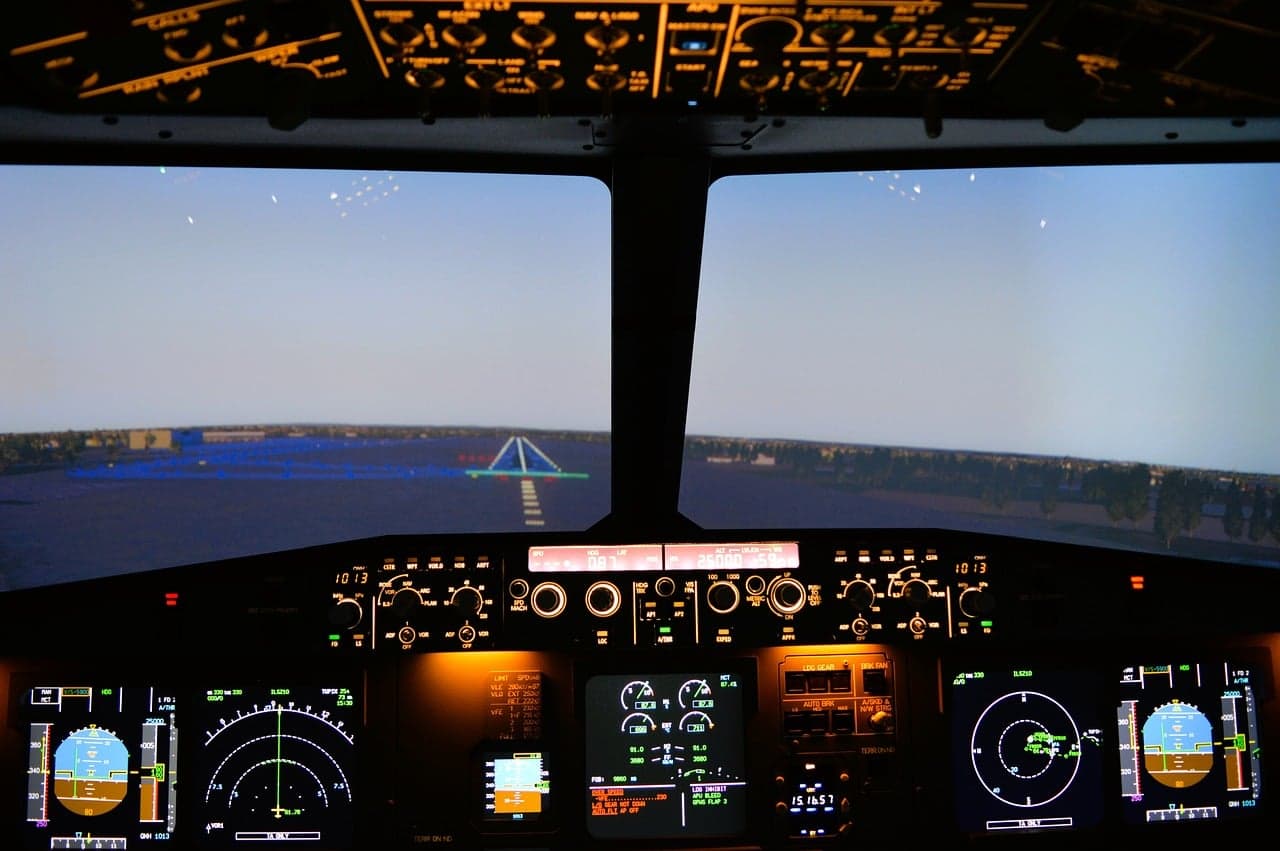
Where flight data comes from: FDRs, QARs and readouts
Every FDM programme starts with a recording. A walk through the chain from the recorders on board to an accepted readout: what an FDR and a QAR each do, how frame-based data becomes engineering units, how recordings leave the aircraft, and what to tell a provider first.

Meet AeroSight at World Aviation Festival 2026
Meet the AeroSight team in Lisbon at Booth 2-139. Here’s who’s attending, their areas of expertise, and how to book a sales slot before schedules fill up.

Flight Data Monitoring (FDM) Programme: Top Risks
A Flight Data Monitoring (FDM) programme is a vital component of an operator’s Safety Management System (SMS), helping identify operational hazards, enhance safety, and improve efficiency. However, managing risks within an FDM programme—such as data loss, ineffective event triggers, and lack of feedback—is essential to maintaining its integrity and effectiveness. This article explores these key risks and provides strategies to mitigate them, ensuring a robust and proactive safety culture.

Simple and efficient flight data monitoring with AeroSight and Leon Software
The integration of Leon Software with AeroSight provides a practical solution for aircraft operators looking to streamline their flight data monitoring processes. It enables users to seamlessly transfer flight data from Leon to AeroSight for analysis, resulting in more comprehensive reports. The data transfer process is both simplified and secured.

Fly2Sky Leads the Way for new SMS/FDM Integration with TrustFlight and AeroSight
AeroSight, today announced the integration with TrustFlight Ltd. (TrustFlight), a technology innovator focused on digitization of the aviation industry, and its industry-leading SMS, QMS, and Risk platform, TrustFlight Centrik 5. The integration with AeroSight will enable flight departments to link FDM/FOQA events to safety reports and conduct root cause analysis within the Centrik safety and quality management system.

AeroSight Achieves ISO 27001 Certification
We are excited to announce that AeroSight, a provider of Flight Data Monitoring (FDM) software, has achieved ISO 27001 certification. The certification underscores our commitment to information security and management.

AeroSight Announces Integration with Avionica avSYNC for its Flight Data Monitoring Platform
AeroSight announced its integration with Avionica's avSYNC, a cloud-based, automated data synchronization service, into its Flight Data Monitoring (FDM) platform. The integration allows AeroSight customers to have their flight data delivered into the AeroSight system automatically after landing, so FDM analysis starts without a manual download.
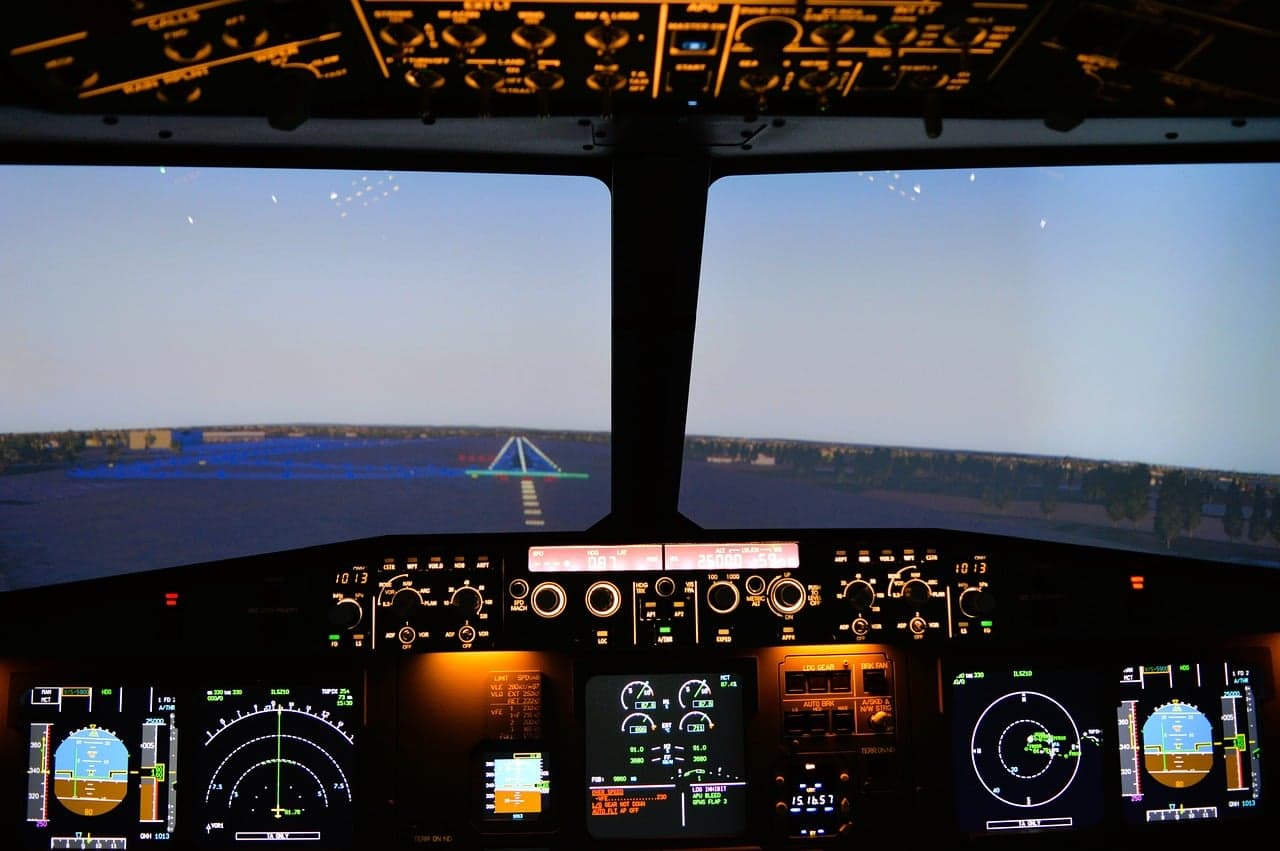
FDM as an Integral Part of the Pilots' ATQP
At AeroSight, our primary goal is to significantly enhance aviation safety for our clients through the meticulous application of Flight Data Monitoring (FDM) programmes. This article explores how FDM, as part of the Alternative Training and Qualification Programme (ATQP), plays a crucial role in pilot training and performance evaluation.

Getting the most of your FDM data
Each Safety Management System/SMS/ needs a process to ensure it achieves the state of safety as defined by its safety performance targets and safety performance indicators. This is delivered by the safety assurance component of the SMS. Safety assurance consists of processes and activities undertaken by the Operator to determine whether the SMS is operating according to expectations and requirements.

AeroSight Achieves ISO 9001 Certification
Quality and excellence are our top priorities at AeroSight and we are proud to announce that we have achieved ISO 9001:2015 certification, a globally recognized standard for quality management systems. ISO 9001:2015 is an internationally recognized framework that sets out the criteria for a quality management system. It provides a systematic approach to managing our organization's processes to ensure that we consistently deliver products and services that meet or exceed customer expectations.

Learn more about the benefits of using AeroSight Pilot Performance
The AeroSight Pilot Performance module tracks pilot performance over time, helping operators spot trends and areas for improvement. The method follows EASA guidance and was validated on real operational flight data with our clients.

AeroSight Launches New Blog
AeroSight is thrilled to announce the launch of its new blog. The articles in this blog will cater to aviation enthusiasts, professionals, and industry insiders, offering engaging articles on flight data monitoring, aviation safety, and exciting company news.