New FDM rules from 1 January 2027: which aircraft, which countries
October 27, 2026 | News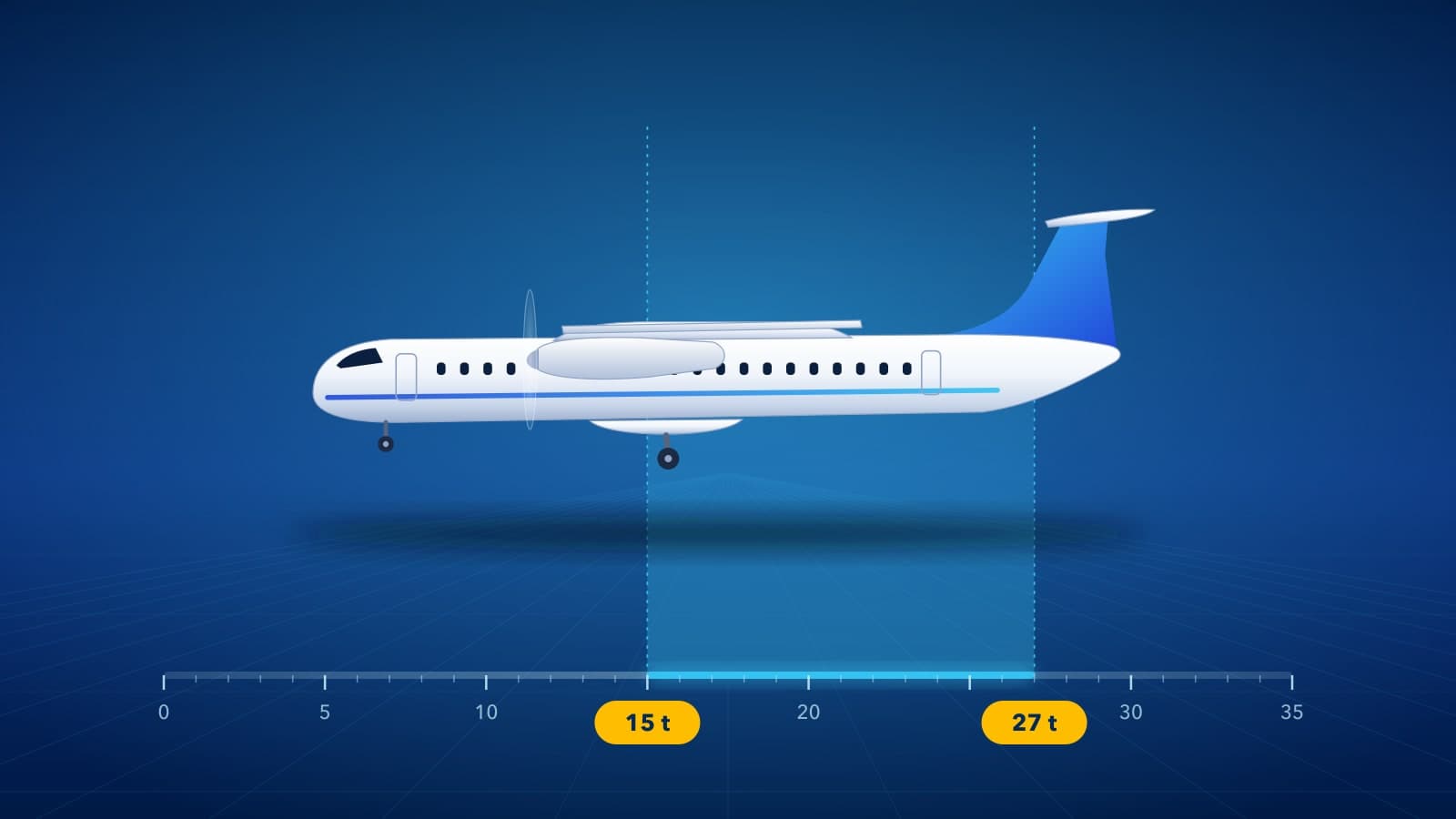
AeroSight Team
ICAO's FDM Standard reaches new aeroplanes of a certificated take-off mass in excess of 15,000 kg with more than 19 seats from 1 January 2027; above 15,000 kg it is recommended whatever the age. Brazil, Canada and Singapore go further; the EU and the UK have not adopted it yet.
For twenty years the line was simple: if you operate aeroplanes with a maximum certificated take-off mass over 27,000 kg in commercial air transport, you run a flight data monitoring (FDM) programme. From 1 January 2027 that line moves, and for regional operators it moves a long way.
This article explains what changed, which aeroplanes it catches, which countries have written it into their own rules, and what an operator taking a new aeroplane should do now. If you want a quick answer for one aeroplane, our FDM requirements check does it in a minute.
What ICAO changed
Amendment 49 to ICAO Annex 6 Part I, applicable since 28 November 2024, made two changes to the flight data analysis provisions in section 3.3:
A new Standard coverage. All aeroplanes of a certificated take-off mass in excess of 15,000 kg with a passenger seating capacity greater than 19, and with a certificate of airworthiness first issued on or after 1 January 2027, shall be equipped with a means to support a flight data analysis programme, and their operator shall establish and maintain one as part of its safety management system (3.3.2 b) and 3.3.3).
A new Recommendation coverage. Recommended Practice 3.3.1 now covers every aeroplane of a certificated take-off mass in excess of 15,000 kg, down from 20,000 kg, whatever its age and seating.
The Standard for aeroplanes of a certificated take-off mass in excess of 27,000 kg is unchanged. ICAO calls it flight data analysis; in Europe and most of the world it is called FDM. They are the same thing.
An ICAO Standard binds states, not operators. Each state has to write it into its own rules or tell ICAO it will not. That is why the answer depends on where your operator certificate is issued.
Which aeroplanes it catches
All three conditions have to be met: a certificated take-off mass in excess of 15,000 kg, more than 19 passenger seats, and a first certificate of airworthiness from 1 January 2027.
ATR 42-600 and ATR 72-600 (a maximum take-off weight of about 18,600 kg and 23,000 kg) in passenger configuration are the main types in scope. Almost every new passenger aeroplane with a certificated take-off mass between 15,000 and 27,000 kg delivered from 2027 is an ATR.
Dash 8-400, Embraer E175, CRJ900 and larger already have a certificated take-off mass in excess of 27,000 kg, so they were covered before.
Freighters and business jets usually fail the seat test: a freighter has no passenger seats, and most business jets have 19 or fewer.
Aeroplanes of a certificated take-off mass of 15,000 kg or less, such as the Saab 340, are outside both the Standard and the Recommendation.
Aeroplanes already flying are covered by the Standard only where a national rule goes further than ICAO, as Brazil and Singapore do. ICAO still recommends a programme for them.
Where it is already law
We read each country's own rules in October 2026. These have adopted the rule or go beyond it:
Brazil. RBAC 121 §121.1221 applies the ICAO rule from 1 January 2027 and also covers aeroplanes already flying with a maximum approved take-off weight over 15,000 kg and more than 19 passenger seats, where FDR or QAR data can be downloaded online or by USB without a retrofit. The programme may be run by a third party. Aeroplanes with a maximum approved take-off weight over 27,000 kg have been covered since August 2025.
Canada. Canada has required an FDM programme since 24 September 2026, now under Interim Order No. 4 (2026), made on 1 October 2026. It applies to CAR 705 operators on scheduled international services: for aeroplanes with a maximum certificated take-off weight (MCTOW) of more than 27,000 kg, and for new aeroplanes with an MCTOW of more than 15,000 kg and 20 or more passenger seats. Operators submit a declaration of compliance to Transport Canada before operating. Transport Canada's Advisory Circular AC 700-068 explains what the programme should contain. Domestic-only flying is outside the order for now.
Singapore. Since 28 November 2024 any operator of an aeroplane with a maximum certificated take-off mass exceeding 15,000 kg needs an FDM programme, with no seat or date condition.
Japan, Hong Kong, Egypt, Algeria, Ethiopia, Senegal, Côte d'Ivoire and Ecuador have adopted the ICAO wording for new aeroplanes from 2027.
Some states already set the bar below 27,000 kg: Morocco requires FDM above a maximum certificated take-off mass of 20,000 kg, South Korea above a maximum take-off weight of 20,000 kg, and China requires it of every airline operator regardless of mass.
Where it is not law yet
The European Union, with Norway, Iceland and Switzerland, still requires FDM only for a maximum certificated take-off mass (MCTOM) of more than 27,000 kg under ORO.AOC.130. EASA plans to adopt the ICAO rule for new aeroplanes over 15,000 kg in about 2029. In the meantime, new EASA guidance for existing programmes applies from 1 January 2028; we cover it in a separate article.
The United Kingdom, Türkiye, the UAE, Saudi Arabia, Qatar and Mexico still require it only above an MCTOM of 27,000 kg.
The United States has no FDM requirement; FOQA remains voluntary.
New Zealand has formally told ICAO it does not require flight data analysis.
Rules move. Before relying on any of this for a decision, check your authority's current operations rules.
Taking a new aeroplane? Start before the ferry flight
If the rule applies, the programme has to work from the aeroplane's first revenue flight, not from its first audit. That takes some lead time:
Know your recorder and its data frame. The programme needs the aeroplane's recording configuration decoded into engineering units. Ask the manufacturer and the installer for the documentation early. Where flight data comes from explains the chain from recorder to readout.
Decide how data leaves the aeroplane. Wireless download, a QAR card or a manual readout each set a different rhythm for your programme.
Set your Event Definition Sheet (EDS). Start from the risks that matter for your type and routes, and decide who reviews and signs off changes to it.
Put crew protection in writing. A non-punitive programme needs an agreed procedure on who can identify a crew and when, signed with your crew representatives.
Plan how you will show it works. Collection rate, time to detection and event trends are what an authority asks for. Your FDM programme's health, on the dashboard describes the indicators.
Check your aeroplane
Our FDM requirements check gives a country-by-country answer for your aeroplane in a minute, with the rule it rests on. If you would like to see a programme running on your own type, as a requirement or as best practice, request a free demo.
Related Articles
Where flight data comes from: FDRs, QARs and readouts
Every FDM programme starts with a recording. A walk through the chain from the recorders on board to an accepted readout: what an FDR and a QAR each do, how frame-based data becomes engineering units, how recordings leave the aircraft, and what to tell a provider first.
Your FDM programme's health, on the dashboard
AeroSight v2 deep-dive: the EOFDM programme-health KPIs an auditor looks for, reports you build yourself, an Event Definition Sheet with its full sign-off history, and an audit trail of who did what and who could.