Flight Data Engineering Team Lead
FDM, FOQA and FDA describe the same programme: routine analysis of recorded flight data to reduce operational risks. The rules differ: ICAO sets scope by certificated take-off mass, EASA by MCTOM, Canada by MCTOW; the FAA makes FOQA voluntary and protects approved programmes from enforcement use.
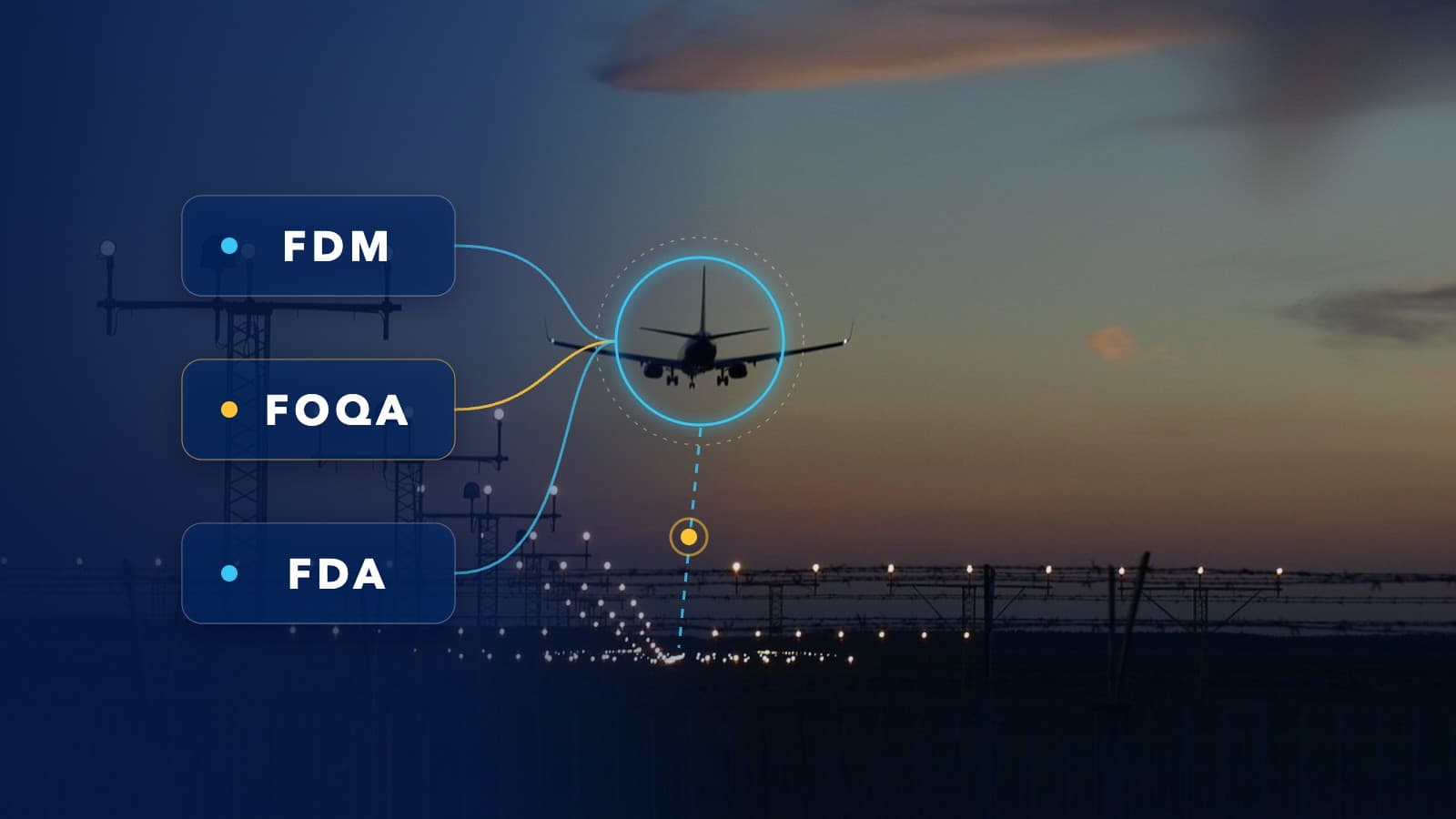
Ask three safety managers what their flight data programme is called and you may get three different answers: FDM in Europe, FOQA in the United States, FDA in ICAO documents. They are describing the same process - how to improve aviation safety with the use of flight data. Every flight already records hundreds of parameters; the programme uses that data routinely, identifies areas of operational risks, calculates current safety margins and trends, highlights unacceptable risks and confirms the effectiveness of any remedial action by continued monitoring.
Apart from the name, what differs from one regulatory framework to another is not the analysis but the rules around it: whether the programme is required, which aircraft it covers, and how the data and the crews behind it are protected.
What do FDM, FOQA and FDA stand for?
FDM, flight data monitoring. The term used by EASA, the UK CAA and most authorities that follow the European model. EASA's rule is ORO.AOC.130, and the UK CAA's guidance is CAP 739, both titled flight data monitoring.
FOQA, flight operational quality assurance. The FAA's term, and the one you will hear in the United States. The FAA's guidance is Advisory Circular AC 120-82.
FDA, flight data analysis. ICAO's term, used in Annex 6 ("flight data analysis programme") and in IATA's IOSA standards. ICAO's guidance is the Flight Data Analysis Programme Manual (Doc 10000).
HFDM, helicopter flight data monitoring. The same activity for rotorcraft, adapted to how helicopters fly.
You may also meet "FDAP" for flight data analysis programme, or simply "the flight data programme". They all mean the same thing.
Does the programme itself work differently?
No. Whatever it is called, a programme does the same five things:
Collects the data the aircraft already records, from the flight data recorder or a quick access recorder. Our article on where flight data comes from follows that chain from recorder to readout.
Turns it into engineering units and splits it into flight sectors, so a raw recording becomes something an analyst can read.
Detects events, the moment where a deviation from thresholds set by the operator is detected. Our article on common FDM events explains what those events are.
Defines normal practice and trends, because a single event is a question, not a verdict, and patterns across many flights are where the safety value lies.
Feeds the safety management system, by identification and assessment of areas of operational risks, request for remedial action towards an unacceptable risk, and confirmation of the effectiveness of any remedial action by continued monitoring.
All of them also share the condition that makes the rest possible: crew identity is protected, and the data is used to improve safety, not to attribute blame. This is what guarantees a successful flight data monitoring programme.
So where are the differences?
In the rules around the programme. Here is how the main frameworks treat it, in each regulator's own wording.
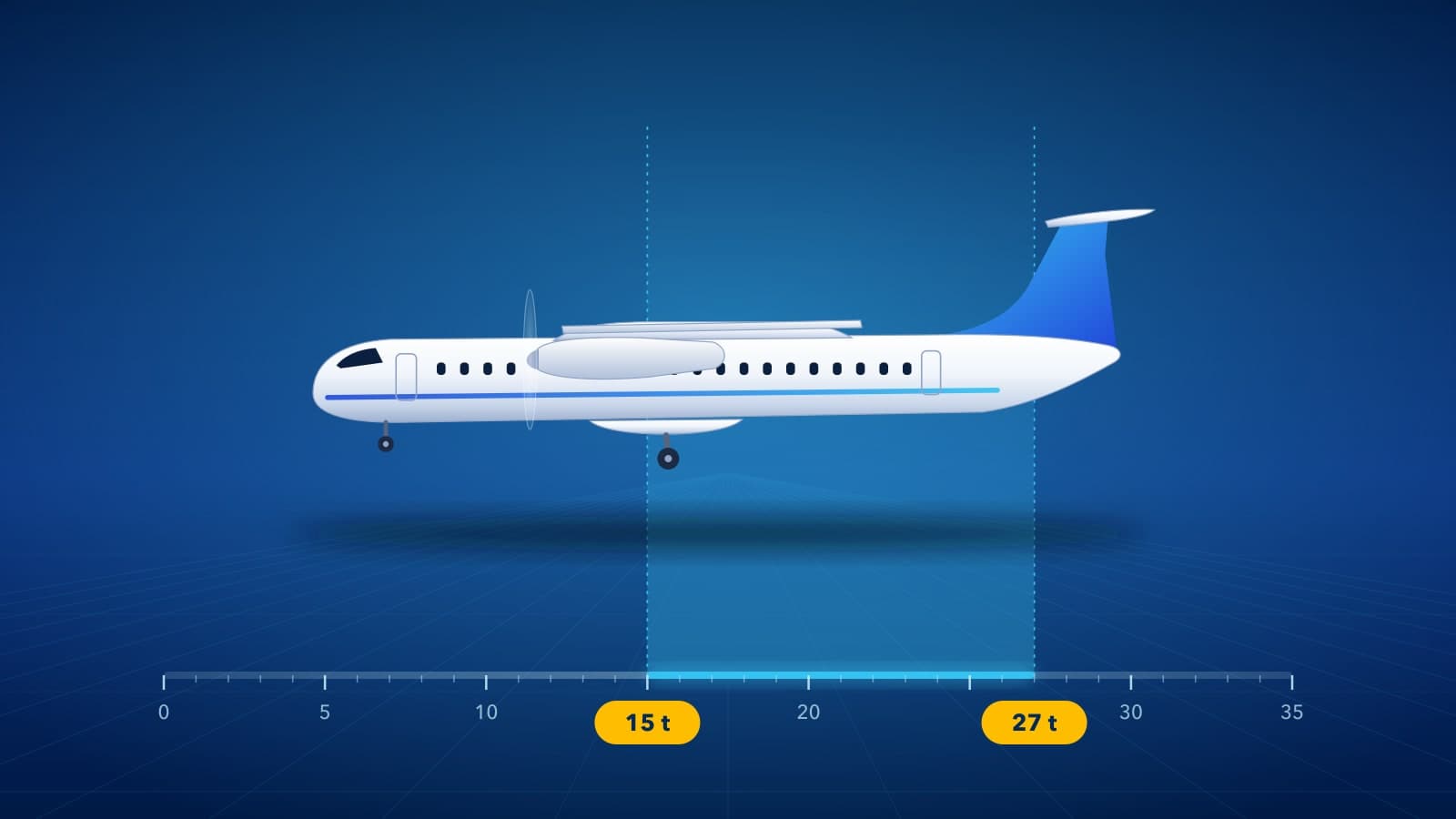
ICAO. Annex 6 Part I makes a flight data analysis programme a Standard for aeroplanes of a certificated take-off mass in excess of 27,000 kg, and from 1 January 2027 for new aeroplanes of a certificated take-off mass in excess of 15,000 kg with more than 19 passenger seats. It recommends one for every aeroplane of a certificated take-off mass in excess of 15,000 kg. For helicopters, Annex 6 Part III recommends a programme for those of a certificated take-off mass in excess of 7,000 kg, or with more than nine passenger seats, that carry a flight data recorder. In every case the programme sits inside the safety management system and must be non-punitive. ICAO Standards bind states, not operators, so what applies to you depends on how your state wrote them into law: our article on the new FDM rules from 2027 goes through who has adopted what.
EASA. ORO.AOC.130 requires commercial air transport operators to run an FDM programme for aeroplanes with a maximum certificated take-off mass (MCTOM) of more than 27,000 kg, integrated into the operator's management system. Its acceptable means of compliance describe what the programme should contain, and new targets for existing programmes apply from 1 January 2028: how many flights to cover, how quickly data is processed and events validated, and how long data is kept. They are summarised on our EASA 2028 page.
UK CAA. The United Kingdom kept the same rule, an FDM programme for aeroplanes with an MCTOM of more than 27,000 kg, and its CAP 739 is one of the most widely read guides to running a programme well.
FAA. FOQA is voluntary. An operator chooses to run a programme, and if the FAA approves its FOQA Implementation and Operations Plan, the programme gets legal protection: under 14 CFR 13.401, the FAA does not use FOQA data in enforcement action against the operator or its employees, except for criminal or deliberate acts. In return, the operator shares de-identified aggregate FOQA data with the FAA, and Part 193 protects that information from public disclosure. AC 120-82 describes one way to set up a programme the FAA finds acceptable and Order 8900.1 Vol.11 Ch.2 Section 2 Safety Assurance System: Flight Operational Quality Assurance (FOQA) gives further guidance on the approval process.
Canada. Transport Canada now requires an FDM programme for CAR 705 operators on scheduled international services, set by maximum certificated take-off weight (MCTOW), under Interim Order No. 4 (2026). Domestic-only flying is outside the order for now.
Why does voluntary versus mandatory matter?
It changes why the programme exists and what has to be shown.
Where FDM is mandatory, the programme is something an authority audits. The question an inspector asks is whether it covers the aircraft it should, whether it works, and whether the operator can show that it does. EASA's 2028 targets push that further, from "have a programme" to "show these numbers".
Where FOQA is voluntary, the incentive is the protection. An operator invests in a programme because the data is worth having and because, once the plan is approved, the results can be used to reduce or eliminate safety risks, without becoming evidence against the crew. The work of keeping crews' trust is the same; the reason the programme exists is different.
For an operator flying under more than one framework, such as a US-registered business jet operating into Europe, or a European airline with a US subsidiary, the analysis is shared and only the paperwork and the reporting differ.
Which term should you use?
Use the term your own authority uses, because that is what your manuals, your safety management system and your auditors will expect: FDM under EASA or the UK CAA, FOQA under the FAA, FDA when you are quoting ICAO.
When you talk to a provider, the terms are interchangeable. The useful questions are not about the name but about your rules: which aircraft does your authority require you to cover, which guidance does it expect you to follow, and what does it want to see. Our FDM requirements check answers the first one country by country, for your own aeroplane.
How can AeroSight support you?
AeroSight FDM supports FDM and FOQA programmes under ICAO Annex 6, EASA (EU 965/2012), FAA AC 120-82 and UK CAA CAP 739, for airlines, business aviation and helicopter operators. The platform is built around each operator's own operations and procedures: flights are processed in minutes, event detection is defined by the operator, and every flight is open to review in 3D. The regulatory requirements page sets out what each framework asks for.
Whatever term your regulator uses, the fastest way to see whether a programme fits your operation is with your own data: request a free demo and we will walk through it with your aircraft type.